
Agitation plays a crucial role in the performance of pretreatment auxiliaries, which are essential in various industrial processes, especially in textile and chemical industries. As a supplier of pretreatment auxiliaries, I have witnessed firsthand the significant impact that agitation can have on the effectiveness of these products. In this blog, I will explore the effects of agitation on the performance of pretreatment auxiliaries, including Chemical Chelating Agent, Hydrogen Peroxide Stabilizer, and Scouring and Penetrating Agent.
1. Understanding Pretreatment Auxiliaries
Pretreatment auxiliaries are chemicals used to prepare materials before the main processing steps. They help to remove impurities, improve the wettability of the material, and enhance the overall quality of the final product. The three types of auxiliaries mentioned above - Chemical Chelating Agent, Hydrogen Peroxide Stabilizer, and Scouring and Penetrating Agent - each have specific functions.
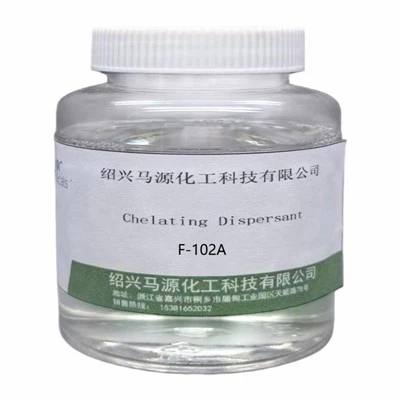
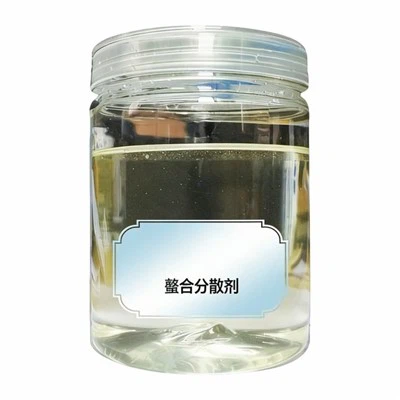
- Chemical Chelating Agent: This agent is used to bind metal ions in the solution, preventing them from interfering with the chemical reactions during the pretreatment process. By chelating metal ions, it helps to maintain the stability of the solution and improve the quality of the treated material. You can learn more about Chemical Chelating Agent.
- Hydrogen Peroxide Stabilizer: Hydrogen peroxide is commonly used in the pretreatment process for bleaching and oxidation. However, it is unstable and can decompose easily. A hydrogen peroxide stabilizer helps to control the decomposition rate of hydrogen peroxide, ensuring that it remains active for a longer time and provides consistent results. More details about Hydrogen Peroxide Stabilizer.
- Scouring and Penetrating Agent: This agent is used to remove natural impurities, such as oils, waxes, and dirt, from the material surface. It also helps the pretreatment chemicals to penetrate into the material more effectively, improving the overall pretreatment efficiency. Check out Scouring and Penetrating Agent for more information.
2. Effects of Agitation on Pretreatment Auxiliaries
2.1 Mixing and Distribution
Agitation is essential for ensuring uniform mixing and distribution of pretreatment auxiliaries in the solution. When the solution is agitated, the auxiliaries are evenly dispersed, which allows them to interact with the material more effectively. For example, in the case of a scouring and penetrating agent, proper agitation ensures that the agent can reach all parts of the material surface, removing impurities uniformly. Without sufficient agitation, the auxiliaries may accumulate in certain areas, leading to uneven treatment and poor product quality.
2.2 Reaction Kinetics
Agitation can significantly affect the reaction kinetics of pretreatment auxiliaries. By increasing the agitation speed, the mass transfer rate between the auxiliaries and the material is enhanced. This means that the chemical reactions between the auxiliaries and the impurities on the material surface occur more rapidly. For instance, in the bleaching process using hydrogen peroxide, agitation helps to increase the contact between the hydrogen peroxide and the material, accelerating the oxidation reaction and improving the bleaching efficiency.
2.3 Solubility and Dissolution
Some pretreatment auxiliaries may have limited solubility in the solution. Agitation can help to improve their solubility and dissolution rate. By stirring the solution, the auxiliaries are continuously exposed to fresh solvent, which promotes their dissolution. This is particularly important for chemical chelating agents, as they need to be fully dissolved in the solution to effectively bind metal ions. Insufficient agitation may result in undissolved particles of the auxiliaries, reducing their effectiveness.


2.4 Foaming and Emulsification
Agitation can also influence the foaming and emulsification properties of pretreatment auxiliaries. In some cases, agitation may cause excessive foaming, which can be a problem in the pretreatment process. Excessive foam can interfere with the contact between the auxiliaries and the material, and it may also lead to difficulties in handling and processing. On the other hand, proper agitation can help to form stable emulsions, which are beneficial for the distribution and action of the auxiliaries. For example, in the case of a scouring and penetrating agent, a stable emulsion can ensure better penetration of the agent into the material.
3. Optimizing Agitation for Pretreatment Auxiliaries
To maximize the performance of pretreatment auxiliaries, it is important to optimize the agitation conditions. Here are some factors to consider:
3.1 Agitation Speed
The agitation speed should be carefully selected based on the type of auxiliaries and the characteristics of the material being treated. A too low agitation speed may result in poor mixing and distribution, while a too high speed may cause excessive foaming or damage to the material. Generally, a moderate agitation speed is recommended to ensure uniform mixing and effective reaction kinetics.
3.2 Agitation Time
The agitation time also plays a crucial role. Sufficient agitation time is required to ensure that the auxiliaries are fully dissolved, distributed, and reacted with the material. However, over - agitation can be wasteful and may even have a negative impact on the product quality. Therefore, the agitation time should be determined based on the specific requirements of the pretreatment process.
3.3 Agitation Method
There are different agitation methods, such as mechanical stirring, ultrasonic agitation, and air sparging. Each method has its own advantages and disadvantages. Mechanical stirring is the most commonly used method, which can provide strong and uniform agitation. Ultrasonic agitation can enhance the mass transfer rate and promote chemical reactions, but it may be more expensive. Air sparging can be used to create a gentle agitation and is suitable for some sensitive materials.
4. Conclusion
Agitation has a profound impact on the performance of pretreatment auxiliaries. It affects the mixing, distribution, reaction kinetics, solubility, and foaming properties of the auxiliaries. By optimizing the agitation conditions, we can improve the effectiveness of the pretreatment process and ensure high - quality products. As a supplier of pretreatment auxiliaries, we are committed to providing our customers with the best - quality products and technical support. If you are interested in our pretreatment auxiliaries or have any questions about the agitation process, please feel free to contact us for procurement and further discussions.
References
- Smith, J. (2018). Chemical Engineering Principles in Pretreatment Processes. New York: Wiley.
- Johnson, A. (2019). Textile Pretreatment: A Comprehensive Guide. London: Taylor & Francis.
- Brown, C. (2020). Advances in Pretreatment Auxiliaries. Journal of Industrial Chemistry, 45(2), 123 - 135.