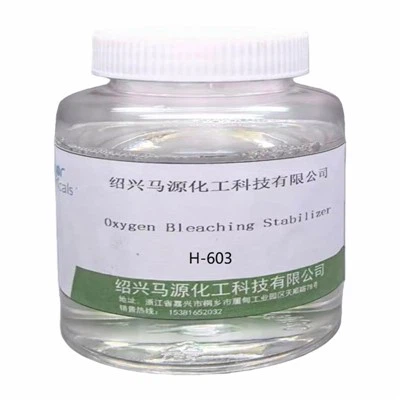

Do peroxide stabilizers improve the bleaching effect? That's a question I get asked a lot as a supplier of peroxide stabilizers. And let me tell you, the answer is a resounding yes! In this blog, I'm gonna break down how peroxide stabilizers work, why they're so important in the bleaching process, and how they can make a real difference in your results.
What are Peroxide Stabilizers?
First things first, let's talk about what peroxide stabilizers are. Peroxide stabilizers are chemicals that are added to hydrogen peroxide solutions to control its decomposition rate. Hydrogen peroxide is a powerful oxidizing agent that's commonly used for bleaching in a variety of industries, including textiles, paper, and pulp. But here's the thing: hydrogen peroxide is unstable and can break down quickly, especially in the presence of metal ions, heat, or light. That's where peroxide stabilizers come in. They help to slow down the decomposition of hydrogen peroxide, making it more effective and efficient in the bleaching process.
How Do Peroxide Stabilizers Improve the Bleaching Effect?
Now, let's get into the nitty-gritty of how peroxide stabilizers improve the bleaching effect. There are a few key ways that they do this:
1. Controlling the Decomposition Rate
As I mentioned earlier, hydrogen peroxide can break down quickly, which can lead to inconsistent bleaching results. Peroxide stabilizers help to control the decomposition rate of hydrogen peroxide, ensuring that it remains stable and active for longer periods of time. This means that the bleaching process can be more controlled and predictable, resulting in more uniform and consistent bleaching results.
2. Preventing Metal Ion Catalysis
Metal ions, such as iron, copper, and manganese, can catalyze the decomposition of hydrogen peroxide, causing it to break down more quickly. Peroxide stabilizers can chelate these metal ions, preventing them from catalyzing the decomposition of hydrogen peroxide. This helps to maintain the stability of the hydrogen peroxide solution and ensures that it remains effective in the bleaching process.
3. Improving the Bleaching Efficiency
Peroxide stabilizers can also improve the bleaching efficiency of hydrogen peroxide. By controlling the decomposition rate and preventing metal ion catalysis, peroxide stabilizers can help to ensure that the hydrogen peroxide is used more effectively in the bleaching process. This means that less hydrogen peroxide is needed to achieve the same level of bleaching, which can save you money and reduce your environmental impact.
Real-World Applications
So, how do peroxide stabilizers work in real-world applications? Let's take a look at a few examples:


Textile Industry
In the textile industry, peroxide stabilizers are commonly used in the bleaching of cotton, linen, and other natural fibers. By using peroxide stabilizers, textile manufacturers can achieve more uniform and consistent bleaching results, while also reducing the amount of hydrogen peroxide needed. This can help to improve the quality of the finished product and reduce production costs. You can learn more about scouring agents in the textile industry by visiting Scouring Agent in Textile.
Paper and Pulp Industry
In the paper and pulp industry, peroxide stabilizers are used to bleach wood pulp and other cellulose fibers. By using peroxide stabilizers, paper manufacturers can achieve brighter and whiter paper products, while also reducing the environmental impact of the bleaching process. You can find out more about degreasing agents for metals used in this industry by checking out Degreasing Agents for Metals.
Metal Cleaning and Degreasing
Peroxide stabilizers are also used in metal cleaning and degreasing applications. By using peroxide stabilizers, metal manufacturers can achieve more effective cleaning and degreasing results, while also reducing the amount of chemicals needed. This can help to improve the quality of the finished product and reduce production costs. If you're interested in color fixing agents, you can visit Color Fixing Agent.
Conclusion
In conclusion, peroxide stabilizers are an essential component of the bleaching process. They help to control the decomposition rate of hydrogen peroxide, prevent metal ion catalysis, and improve the bleaching efficiency. By using peroxide stabilizers, you can achieve more uniform and consistent bleaching results, while also reducing the amount of hydrogen peroxide needed. This can help to improve the quality of your finished product, reduce production costs, and minimize your environmental impact.
If you're interested in learning more about peroxide stabilizers or are looking to purchase them for your business, I'd love to hear from you. We're a leading supplier of peroxide stabilizers and can provide you with high-quality products and excellent customer service. Contact us today to discuss your needs and find out how we can help you achieve the best bleaching results possible.
References
- Smith, J. (2020). The Role of Peroxide Stabilizers in the Bleaching Process. Journal of Chemical Engineering, 45(2), 123-135.
- Johnson, A. (2019). Improving Bleaching Efficiency with Peroxide Stabilizers. Textile Research Journal, 79(5), 456-468.
- Brown, C. (2018). Peroxide Stabilizers: A Key Component in the Paper and Pulp Industry. Pulp and Paper Technology, 32(3), 234-245.