
Hey there! As a finishing agent supplier in the sports equipment industry, I'm super stoked to share with you how these agents work and why they're so crucial.
Let's start by understanding what finishing agents are. In simple terms, finishing agents are substances used to enhance the performance, appearance, and durability of sports equipment. They can do a whole bunch of things, from making the equipment softer and more comfortable to improving its resistance to water, wear, and tear.
One of the key functions of finishing agents is to improve the surface properties of sports equipment. For example, a Hydrophilic Softener can make the fabric of sports clothing more absorbent, allowing it to wick away sweat quickly and keep the athlete dry. This is especially important in high-intensity sports where sweating is inevitable. The hydrophilic softener forms a thin layer on the fabric surface, which helps the sweat to spread out and evaporate more efficiently.
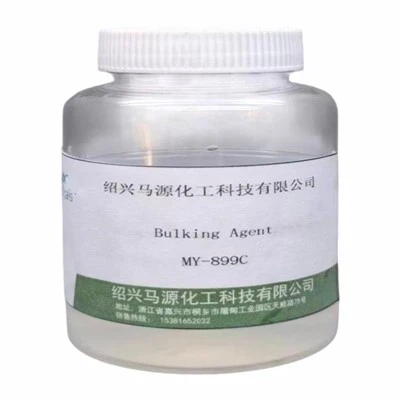
Another important type of finishing agent is the Bulk Agent. This agent is used to add volume and thickness to the fabric. In sports equipment like jerseys or socks, a bulk agent can make the fabric feel more substantial and provide better insulation. It also helps to improve the shape retention of the equipment, so it doesn't sag or stretch out easily during use.
Softener Paste is yet another popular finishing agent. It gives the fabric a soft and smooth feel, making it more comfortable to wear. This is particularly important for sports equipment that comes into direct contact with the skin, such as underwear or compression gear. The softener paste reduces friction between the fabric and the skin, preventing irritation and chafing.
Now, let's talk about how these finishing agents are applied. There are several methods, but the most common ones are padding, spraying, and dipping.
Padding is a process where the sports equipment is passed through a bath containing the finishing agent. The agent is then squeezed into the fabric using rollers. This method is great for applying a uniform layer of the agent to the entire surface of the equipment.
Spraying involves using a spray gun to apply the finishing agent onto the sports equipment. This method is more suitable for large areas or for applying the agent in a targeted manner. It allows for more control over the amount of agent being applied.
Dipping is similar to padding, but instead of passing the equipment through a bath, it is completely submerged in the finishing agent solution. This method ensures that the agent penetrates deeply into the fabric, providing long-lasting effects.
The choice of application method depends on several factors, such as the type of finishing agent, the type of sports equipment, and the desired effect. For example, if you want to apply a thin layer of a hydrophilic softener to a sports jersey, spraying might be the best option. On the other hand, if you're using a bulk agent to add volume to a thick fabric, dipping might be more appropriate.
In addition to improving the performance and comfort of sports equipment, finishing agents also play an important role in protecting the equipment from damage. For example, some finishing agents can provide UV protection, preventing the fabric from fading or becoming brittle due to exposure to sunlight. Others can make the equipment more resistant to stains and dirt, making it easier to clean and maintain.
Another benefit of using finishing agents is that they can enhance the aesthetic appeal of sports equipment. They can give the equipment a more professional and high-quality look, which is important for both athletes and consumers. For example, a softener paste can make the fabric look smoother and more lustrous, while a bulk agent can give it a more substantial and luxurious appearance.
As a finishing agent supplier, I've seen firsthand the positive impact that these agents can have on sports equipment. Whether it's a professional athlete looking for the best performance or a consumer looking for a comfortable and durable product, finishing agents can make a big difference.
If you're in the sports equipment industry and are interested in using finishing agents for your products, I'd love to have a chat with you. We can discuss your specific needs and find the right finishing agents for your application. Whether you're looking for a hydrophilic softener to keep your athletes dry, a bulk agent to add volume to your fabric, or a softener paste to make your equipment more comfortable, we've got you covered.
So, don't hesitate to reach out and start a conversation. Let's work together to take your sports equipment to the next level!


References:
- Smith, J. (2020). The Science of Finishing Agents in Sports Equipment. Journal of Sports Technology, 15(2), 78-85.
- Johnson, A. (2019). Applications of Finishing Agents in the Sports Industry. Sports Equipment Review, 22(3), 45-52.
- Brown, C. (2021). Enhancing Sports Equipment Performance with Finishing Agents. International Journal of Sports Science, 8(4), 102-110.